Posts

How a Coal-fired Power Plant works

Image
1. Coal Supply Coal from the mine is delivered to the coal hopper, where it is crushed to five centimetres (2 inches) in size. The coal is processed and delivered by a conveyor belt to the generating plant. 2. Pulverizer The coal is then pulverized, or crushed, to a fine powder, mixed with air and blown into the boiler, or furnace for combustion. 3. Boiler The coal / air mixture ignites instantly in the boiler. Millions of litres of purified water are pumped through tubes inside the boiler. Intense heat from the burning coal turns the purified water in the boiler tubes into steam, which spins the turbine (see number four) to create electricity. 4. Precipitator, stack Burning coal produces carbon dioxide (CO2), sulphur dioxide (SO2) and nitrogen oxides (NOx). These gases are vented from the boiler. Bottom ash, which is made of coarse fragments that fall to the bottom of the boiler, is removed. Fly ash, which is very light, exits the boiler along with the hot gases. An electrostatic pre...

Pakistan’s First Water Desalination-&-Power Plant

Image
On the same day (Feb 11, 2008) when South Bound Lyari Expressway was inaugurated, another important project of Pakistan reached its opening milestone. This one is called the DHA Desalination and Power Plant . It is the first project of its kind in Pakistan which desalinates water from the Arabian Sea for human consumption as well as provides Electrical Power to the KESC Grid . The Capacity: The capacity of the Power plant is 94 MW (Mega Watts) and that of the desalination plant is 3 MIGD (Million Imperial Gallons per Day). Electrical Power generated here is supplied to the 132 KV (kilo-volt) KESC grid whereas the Desalinated Water is supplied to CBC/DHA for local distribution. The fuel for the Power Plant is Natural Gas which will be provided by the Sui Southern Gas Company Limited (SSGCL) via 20″ diameter pipeline. The Electrical Power is generated by two turbines . One is Gas fired with the generation capacity of 67MW . The other is Steam fired with the generation capacity of 27 MW ...

Coal-Fired Power Plant

Image
Coal-fired units produce electricity by burning coal in a boiler to heat water to produce steam. The steam, at tremendous pressure, flows into a turbine, which spins a generator to produce electricity. The steam is cooled, condensed back into water, and returned to the boiler to start the process over. For example, the coal-fired boilers at TVA’s Kingston Fossil Plant near Knoxville, Tennessee, heat water to about 1,000 degrees Fahrenheit (540 degrees Celsius) to create steam. The steam is piped to the turbines at pressures of more than 1,800 pounds per square inch (130 kilograms per square centimeter). The turbines are connected to the generators and spin them at 3600 revolutions per minute to make alternating current electricity at 20,000 volts. River water is pumped through tubes in a condenser to cool and condense the steam coming out of the turbines. The Kingston plant generates about 10 billion kilowatt-hours a year, or enough electricity to supply 700,000 homes. To mee...

Winterize Your Boat's Drive System

Image
By carefully winterizing a boat's drive system, you can save yourself thousands of dollars in repairs and the frustration of poor performance in the spring. Follow these steps to winterizing your boat's drive system, and when warm weather arrives once again you will be out on the water in no time. To Winterize Well, Plan Ahead and Use A Checklist Before you begin, plan ahead by gathering all the necessary items to perform the task. Use a convenient checklist to keep the process organized and to ensure each step is completed whether you do the work or you hire a professional. Add to the checklist tasks or specific products recommended by the manufacturer manual. Change the Engine and Drive Train Oil After running your boat all summer, it's likely that water, acids and other byproducts have built up. It's important to change the oil to prevent corrosion and excessive wear which can lead to loss of power, poor fuel economy or engine failure. Use a manual or electr...

Diesel Engines Series 16V 2000

Image
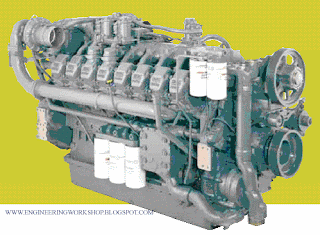
for GenSet Applications Technical Data Rating Definition Gen Set Continuous Power This type of rating applies to heavy-duty diesel generator sets when used as a utility power source. The engine is expected to be operated with constant and/or dedicated loads with load factors up to 100% of the continuous power rating. Under these conditions, the engine may be operated for an unlimited number of hours per year. Gen Set Limited Running Time Power This type of rating applies to heavy-duty diesel generator sets when used as a utility power source which will deliver rated power for up to 700 hours per year. Normal varying load factors and/or constant dedicated loads must not exceed 75% of the limited running time power rating. Gen Set Prime Power This type of rating applies to heavy-duty diesel generator sets when used as a utility power source. It is subject to normal varying load conditions, with an intermittent overload capability of 10% (up to the standby power rating), for no more than...

Diesel Engines 12V/16V 2000 M90

Image
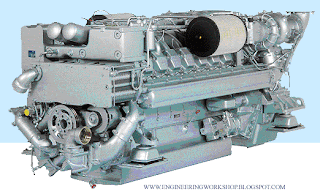
for Fast Vessels with Low Load Factors (1DS) Typical applications: Fast Yachts, Fast Patrol Boats, Police Craft and Fire-Fighting Vessels Specifications are subject to change without notice. ormation refer to installation drawing. e inf plet or com e. F ximat o e appr All dimensions arFor further information consult your MTU or MTU Detroit Diesel distributor/dealer

Hydraulic systems

Image
Although the hydraulic systems used aboard vary widely. They may, however, be grouped into the three basic set ups. Constant flow For a constant flow pump it is possible to vary the flow to a load by varying the outlet from the load. The major components are the fixed delivery pump, unloading valve, and accumulator. The accumulator consists of a steel pressure vessel within which is a rubber bag. The space between the bag and the steel walls is filled with nitrogen at a set pressure. When the constant delivery pump is started, oil is supplied to the accumulator inflating the bag with oil against the nitrogen pressure. When the set system pressure is reached the unloader valve will open maintaining system pressure at a set amount. The check valve maintains the pressure in the accumulator giving a ready reserve on demand. An alternative to this is to have a pressure cut out switch for the pump with a suitable dead band to prevent cycling. When a throttle or control valve ...